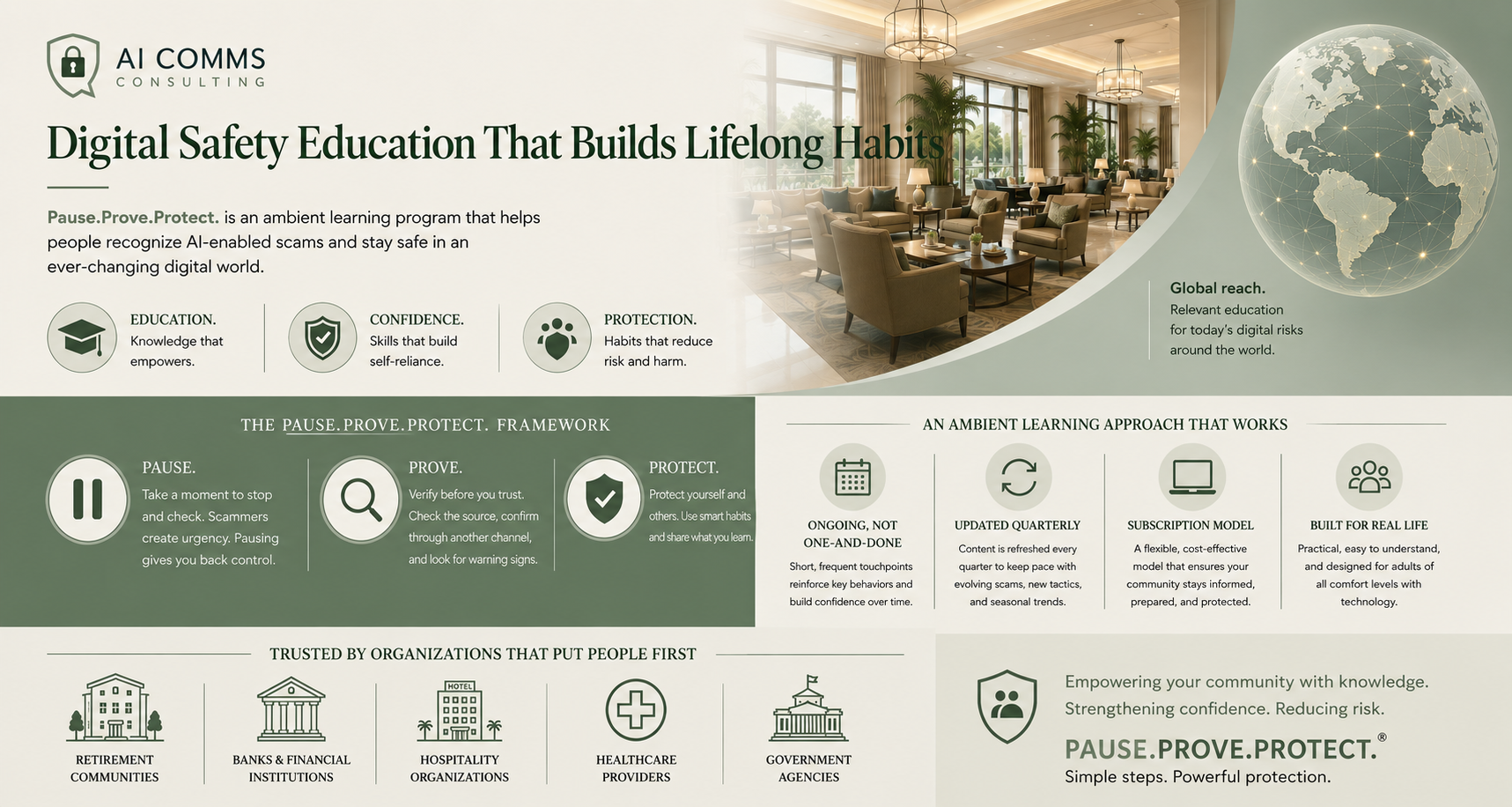


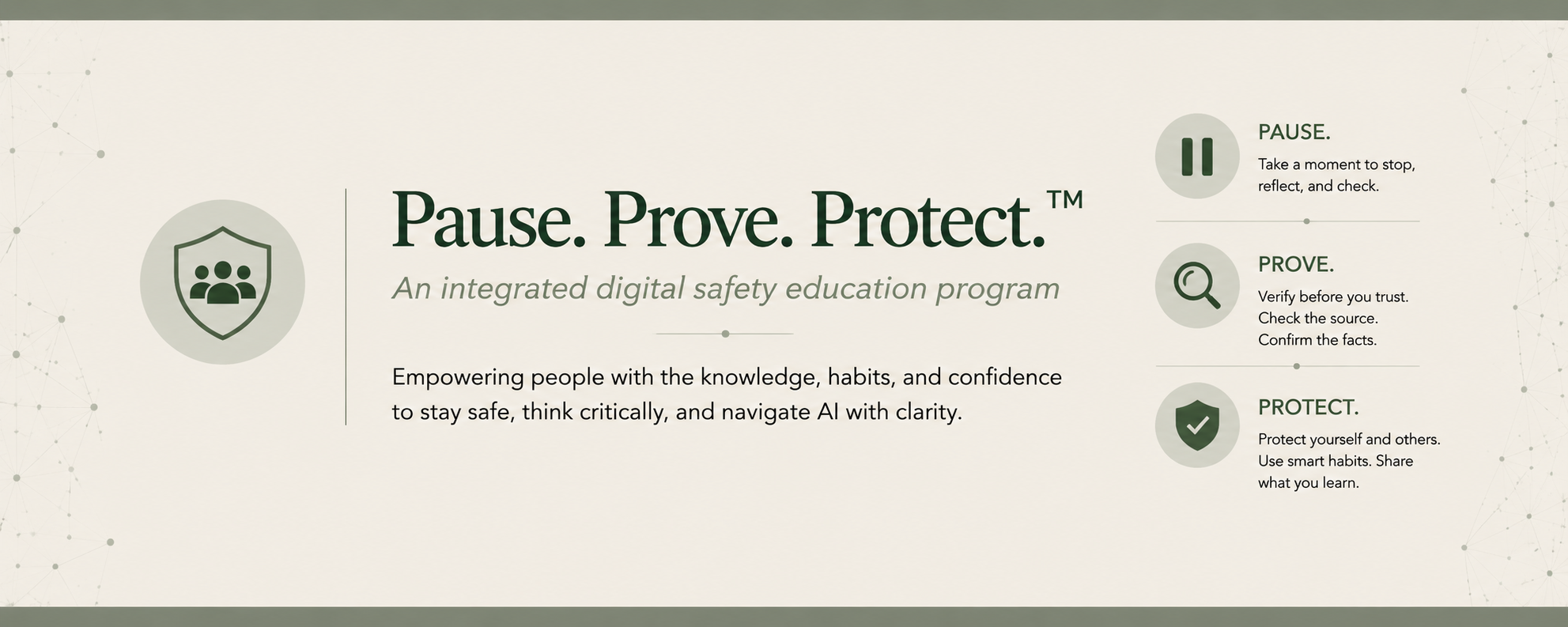

Pause. Prove. Protect™

An integrated digital safety education program

More Than A Digital Safety Presentation

Good digital safety habits don’t form overnight. They develop gradually through repetition, reminders, and real-life practice.

The more often pause, prove, and protect is reinforced in everyday situations, the more familiar and comfortable those steps become.

Ongoing education and reinforcement help elevate awareness which leads to more informed decisions over time.


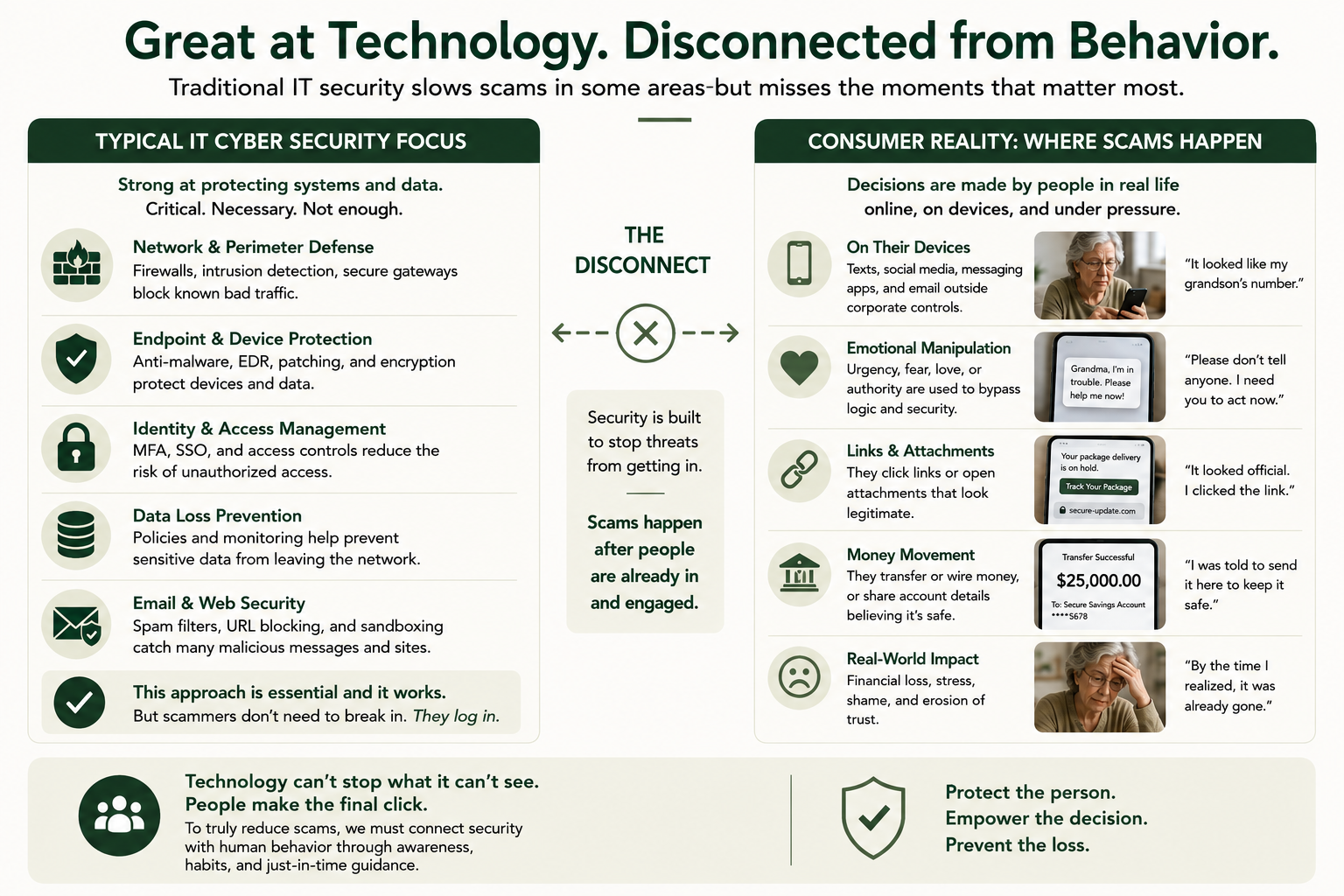
Digital Safety is no longer just an IT issue, it is also an education issue

Today’s fraud attempts are increasingly using artificial intelligence to copy voices, create convincing messages, and impersonate trusted institutions. Our program helps individuals build simple, repeatable habits to support reducing risk through proactive education.


The Pause. Prove. Protect™ Program package is created to seamlessly integrate into your organization, staying fresh and updated each quarter. Examples include:

  • A leader/trainer brief and Q&A for company support answering questions

  • Leader email to explain the focus area, why it’s important

  • Staff guide with conversation topics

  • Introduction article for your staff newsletter

  • Copy for trifold fliers for reception areas that can be easily branded

  • Copy for table tents, for dining areas and reception rooms

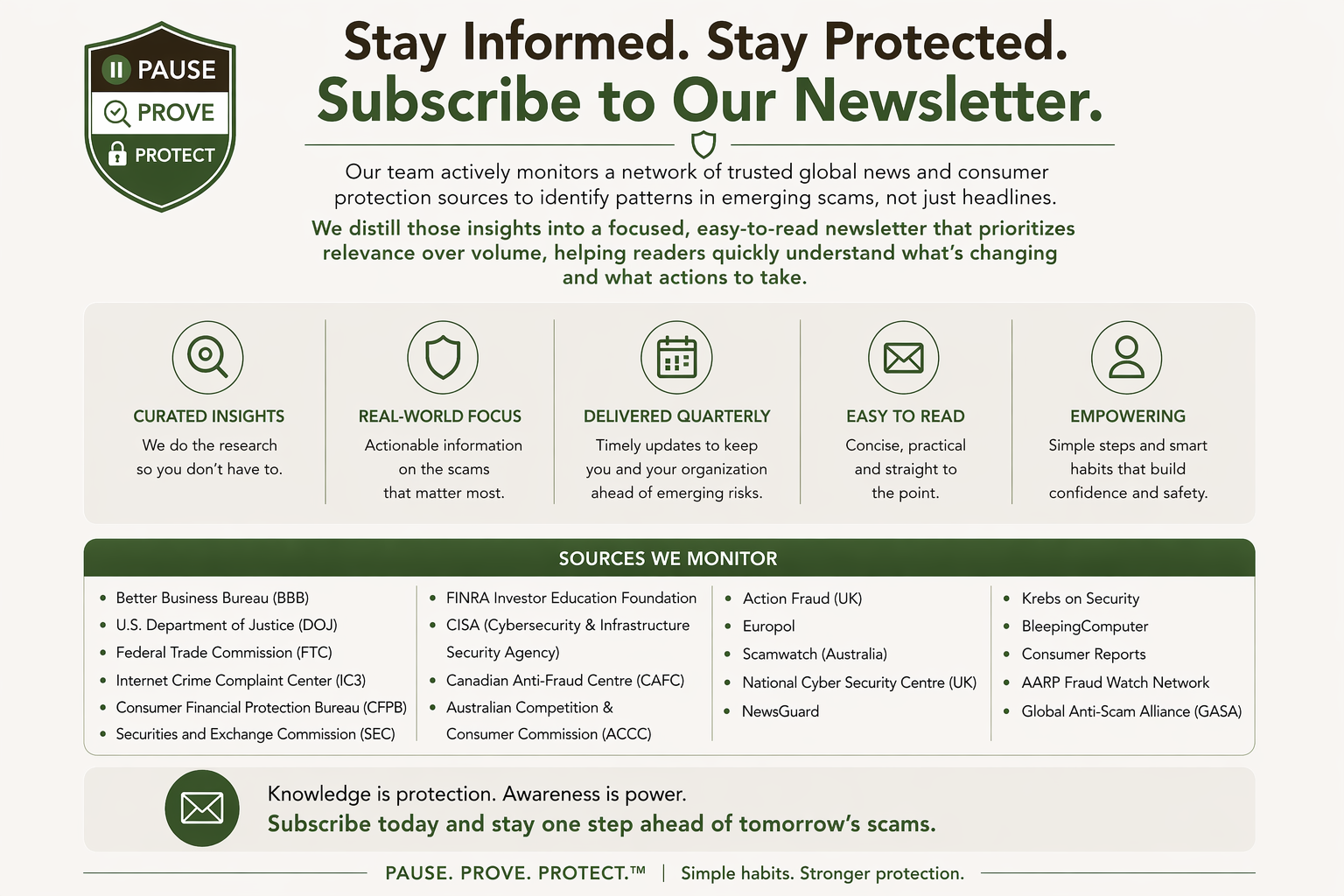
  • A quarterly email highlighting latest scams, frauds and prevention insights

    *Please inquire if you’d like a video series option, or if you would like to take advantage of our white label option for complete integration.

Alternatively, we also offer the Pause.Prove.Protect™ Mini Course, a one off, 2-hour train-the-trainer session, for organizations that are just looking to better understand how to educate their staff, employees, members or customers about digital safety. You walk away with the knowledge, the mini presentation, as well as examples relevant to your industry that you can integrate into your organization.

Topics covered include

  • Deepfakes: A computer-generated voice, video or text that looks and sounds real.

  • Phishing: Usually a text or email requesting you click a link, provide bank codes, etc.​

  • QR codes: A square image you scan with your phone camera to open a website.​

  • Romance & friendship: When new people in your life ask for money.

  • Too good to be true: Social media ads ​and false promises.

  • Investment & easy money: Too good to be true? It probably is.​

  • Fake charity scams (especially after disasters)

  • Fake "tech support" scams: Pop-up messages, virus detected, etc.

Get In Touch

If you're interested in working with us, complete the form with a few details about your project.